
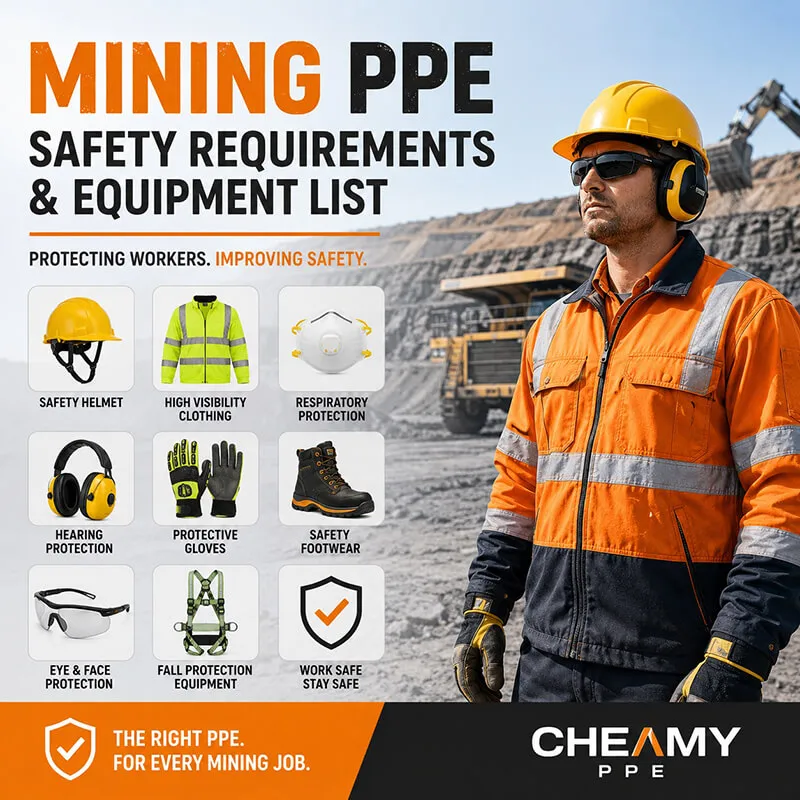
Mining is one of the most demanding and high-risk working environments. From underground tunnels to open-pit operations, workers are exposed to dust, falling objects, noise, heavy machinery, chemical hazards, and low-visibility conditions every day. Choosing the right Personal Protective Equipment (PPE) is not only about meeting safety requirements — it also helps improve comfort, productivity, and confidence on site.
At CHEAMY PPE, we understand that different mining operations require different levels of protection. This guide explains the essential mining PPE safety requirements and provides a practical equipment list for mining workers.
Why PPE Is Essential in Mining Operations
Mining sites often contain multiple hazards at the same time, including:
- Airborne dust and harmful particles
- Falling rocks and debris
- Loud machinery noise
- Slippery or uneven surfaces
- Limited visibility underground
- Welding sparks and heat exposure
- Chemical splashes and fuel handling risks
Proper PPE helps reduce workplace injuries and supports safer day-to-day operations across mining sites.
Basic Mining PPE Safety Requirements
Mining PPE requirements may vary depending on local regulations, mine type, and specific tasks. However, most mining operations require workers to wear the following core protective equipment.
1. Safety Helmets
Head protection is essential in mining environments where falling tools, rocks, or low overhead structures are common.
Recommended features:
- Impact-resistant shell
- Adjustable suspension system
- Chin strap for secure fit
- Compatibility with earmuffs and face shields
Safety helmets should be regularly inspected for cracks, deformation, or damage caused by sunlight and heavy impact.
2. High Visibility Clothing
Mining sites often involve moving vehicles, loaders, and heavy equipment. High visibility workwear helps workers remain visible in dusty, dark, or low-light conditions.
Common options:
- Reflective safety vests
- Reflective coveralls
- High visibility jackets
- Flame-resistant reflective clothing
Comfortable and breathable materials are especially important for long working shifts.
3. Respiratory Protection
Dust generated during drilling, blasting, and material handling can affect respiratory health over time.
Depending on the environment, mining workers may use:
- Disposable dust masks
- Half-face respirators
- Full-face respirators
- Filters designed for dust, fumes, or chemicals
Respiratory PPE should fit properly and be suitable for the specific airborne hazards on site.
4. Hearing Protection
Mining equipment and drilling operations can produce dangerous noise levels. Long-term exposure may lead to hearing damage.
Typical hearing protection includes:
- Earmuffs
- Earplugs
- Helmet-mounted hearing protection
Workers should select hearing protection based on site noise levels and comfort during extended use.
5. Protective Gloves
Different mining tasks require different glove materials and protection levels.
Examples include:
- Cut-resistant gloves
- Impact-resistant gloves
- Anti-vibration gloves
- Chemical-resistant gloves
- Heat-resistant welding gloves
Choosing task-specific gloves helps improve both safety and grip performance.
6. Safety Footwear
Mining surfaces are often rough, wet, and unstable. Safety footwear helps protect against crushing injuries, punctures, slips, and electrical hazards.
Recommended features:
- Steel toe or composite toe protection
- Slip-resistant outsole
- Puncture-resistant midsole
- Waterproof materials
- Ankle support
Good-quality safety footwear also helps reduce fatigue during long shifts.
7. Eye and Face Protection
Flying particles, dust, sparks, and chemical splashes can cause serious eye injuries.
Common eye and face protection:
- Safety glasses
- Anti-fog goggles
- Face shields
- Welding shields
Clear visibility and comfort are important, especially in humid or underground environments.
8. Fall Protection Equipment
For workers operating at heights or near shafts and elevated platforms, fall protection is critical.
Typical equipment includes:
- Full-body harnesses
- Shock-absorbing lanyards
- Lifelines
- Anchorage systems
All fall protection equipment should be inspected before use.